 Connext
 routers fronted funds for fast transfers
Connext routers advanced destination funds so eligible transfers could execute before the bridge finished verifying their messages. Fast execution depended on available funding and whether the receiving function required authenticated origin information. Routers reclaimed their funds through later reconciliation, subject to matching the original transfer. Their liquidity commitment shortened the recipient’s wait while tying up the operator’s capital. This was the legacy Connext router model, before the project’s shift toward Everclear liquidity clearing.
When did router funding shorten the wait?
Router funding shortened the recipient’s wait when a transfer had usable destination liquidity and could execute without authenticated origin information. Token-only transfers and calls to destination functions that accepted unauthenticated input could qualify. A receiver that checked the original caller’s identity needed the slow path’s verification before that check could succeed.
The ordinary prefunded route needed enough usable liquidity for the transfer at execution. Insufficient funding could send a transfer through the slow path, although some contract versions also included a conditional credit alternative.
Destination inventory and conditional credit
Router inventory used the local asset on each supported chain. That asset was the canonical token on its home domain and a representation elsewhere. A network-wide liquidity total did not reveal the usable balance for a particular destination asset.
Funding branches
BridgeFacet distinguished ordinary router balances from an optional Aave Portals branch that could attempt credit-funded execution when a single router lacked liquidity.
Prefunded balances
Router deposits credited a specific router and local asset in that chain’s contract. Operators supplied liquidity for the chains and assets they supported. This accounting made the destination asset balance relevant to execution, even when the operator held additional capital elsewhere.
Configured Aave Portals credit
The Aave Portals branch required a configured pool, one Portal-approved router and a transfer expecting the adopted asset, meaning the token normally delivered to the recipient. A request to receive the local asset bypassed this credit branch. The contract recorded debt for Portal-funded execution; the existence of that code did not establish availability on every deployment.
How did transfer records distinguish delivery from repayment?
Destination records distinguished delivery from repayment through the order of execution and reconciliation, revealing whether router funds arrived before bridge settlement. An origin transaction or an
XCalled
entry established initiation only.
Executed
before
Reconciled
identified fast execution. The
CompletedFast
status recorded that execution and subsequent reconciliation had both occurred.
The slow path reconciled before execution; its combined status was
CompletedSlow
. A token-only transfer’s destination execution record and delivered amount addressed the recipient’s receipt. Reconciliation addressed repayment to the router when it had advanced the funds. These records answered different timing questions without establishing a fixed delivery deadline.
After reconciliation, a receiving contract could reject its application call without reverting the entire destination execution. The
ExternalCalldataExecuted
event’s success flag distinguished that failure. The receiver retained any transferred tokens, and recovery depended on its implementation. Bridge completion alone did not establish that a deposit or other application action succeeded.
Bids between routers and relayers
A router bid contained a signed proposal for destination execution, separating the liquidity commitment from the transaction that eventually reached the chain. Routers monitored supported chains, simulated applicable destination calls and submitted bids to the sequencer. The sequencer collected bids, selected routers and forwarded winning batches to a relayer network.
Relayers submitted destination transactions. A simulation or selected bid did not establish delivery; the destination transaction still needed to execute. An insufficient relayer fee could leave destination execution pending even when a router had offered liquidity.
Reimbursement and matching parameters
A router’s reimbursement depended on its execution matching the original
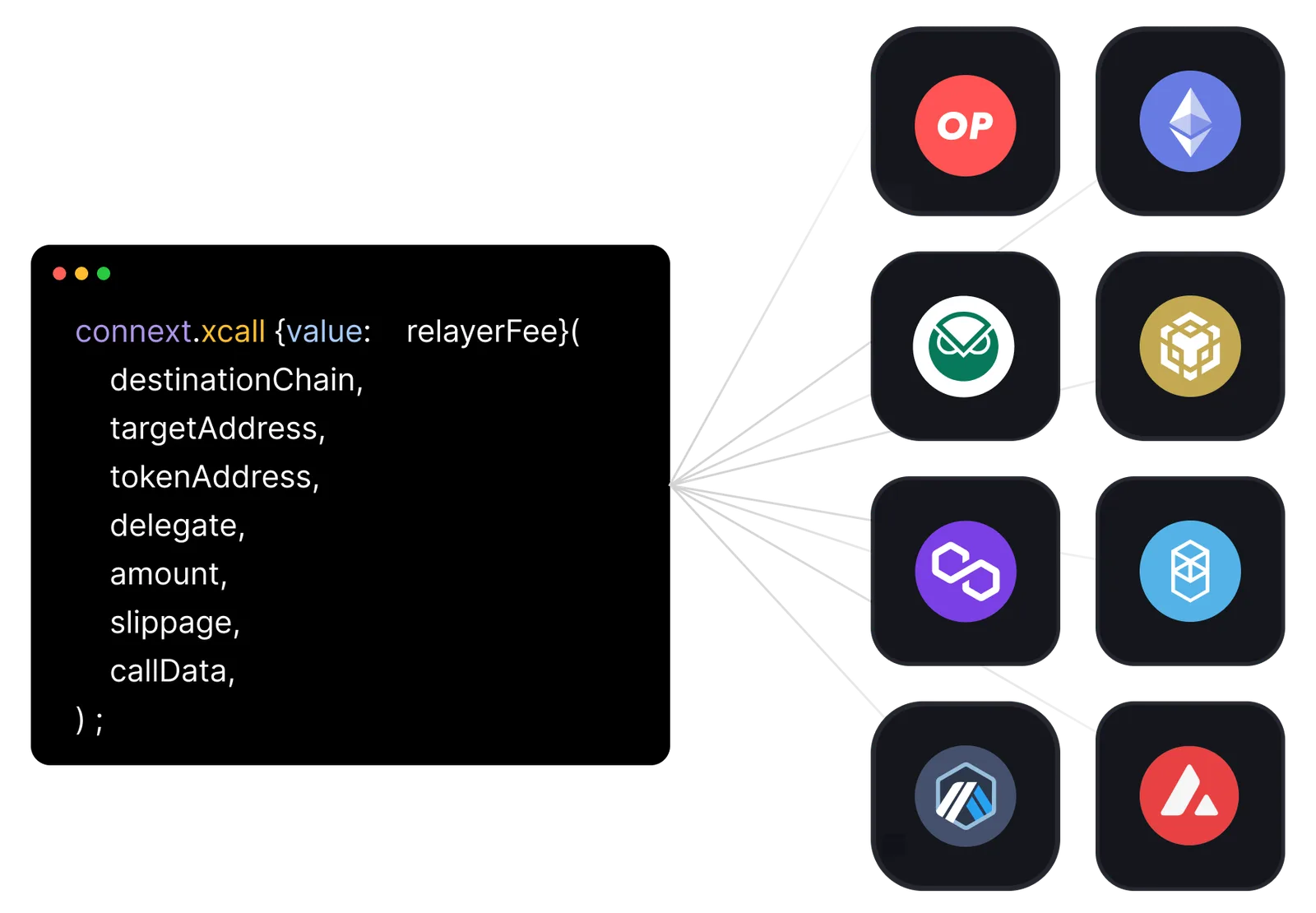
xcall
parameters.
An incorrect amount or different calldata could prevent repayment because the resulting transferId would differ from the one in the settlement message. This condition gave operators a financial reason to deliver the requested funds and instructions accurately.
For the ordinary inventory-funded route, reconciliation restored local-asset liquidity on the destination chain. That design avoided a separate manual rebalancing transfer after each fulfillment. Capital awaiting reconciliation remained committed, however, which limited the balance available for further prefunded transfers.
Legacy fees and payment conditions
The legacy fee schedule separated payment for liquidity from payment for destination transaction execution. The router percentage compensated a capital commitment; the relayer charge funded another service. Neither charge established how quickly an individual transfer would finish.
Connext Routers Fronted Funds for Fast Transfers
- Bids between routers and relayers
- Reimbursement and matching parameters
- Legacy fees and payment conditions
- Operator exposure beyond the fee
| Parameter | Documented legacy value | Applicable condition |
|---|---|---|
| Router liquidity fee | 0.05% (5 basis points) of transferred assets | Fast-liquidity service; slow-path transfers did not incur this fee |
| Relayer fee | Variable estimate, payable in the origin native asset or the transacting asset | Chain conditions and the relayer provider affected the charge |
| Liquidity denomination | Local asset, tracked for each router and asset on each chain | Canonical token on its home domain; representation on other domains |
| Paying for transaction submission did not authenticate origin information for a receiving contract. | ||
Required asset conversions introduced slippage separately from the liquidity fee. The router percentage alone therefore could not predict the final adopted-token receipt. A destination swap also had to satisfy the transfer’s applicable slippage tolerance.
Operator exposure beyond the fee
Router operators carried hot-wallet, API-exposure and protocol-implementation risks alongside the opportunity to earn liquidity fees. The signing key could spend the operator’s funds within the protocol. A compromised router host therefore threatened capital as well as bidding availability.
The legacy configuration supported Web3Signer to avoid keeping an unencrypted mnemonic directly on the router host. Network isolation also helped protect sensitive services. An administration token authenticated API requests; exposing both the API and its token could allow unauthorized operations.
The bridge sunset and Everclear boundary
Connext announced its rebrand to Everclear on June 3, 2024, introducing a clearing direction centered on netting and settlement between chains. Clearing addressed capital rebalancing for participants such as solvers. Legacy routers had advanced funds against individual transfers, making that earlier liquidity commitment a distinct mechanism.
The hosted Connext Bridge announced a sunset and encouraged users to remove pool funds and return
nextAssets
to their canonical domains. Its notice explicitly excluded xERC20 tokens from the sunset’s impact. The assets that the notice named as disabled in the hosted interface were USDC, USDT and DAI.
Frequently asked questions
-
Which address received a router’s withdrawn liquidity?
- A configured router recipient received withdrawals; without one, removeRouterLiquidity used the supplied _to address. Each chain’s Connext contract held its own recipient setting. The signing address alone did not identify the withdrawal wallet.
-
Could another account add liquidity for a router?
- The legacy addRouterLiquidityFor function allowed another account to supply liquidity for a specified router. Its inputs identified the amount, local asset and router address. The deposit credited that router’s inventory in the relevant chain’s contract, with the protocol holding the funds in the local asset.
-
Was there a minimum deposit for operating a router?
- The legacy architecture specified no minimum router liquidity deposit. Contract approval remained a separate state, exposed through getRouterApproval. For prefunded execution, a router’s balance still had to cover its contribution to a destination transfer. The absence of a deposit minimum therefore did not establish fast availability for a particular asset or chain.
-
Were routers paid for forwarding data-only messages?
- The legacy router model charged no liquidity fee for relaying data without a token transfer. A data-only call could still require relayer payment for destination execution. The liquidity charge and the transaction-execution charge covered different services, so a zero router fee did not make the whole crosschain call free.
-
Did a router’s transaction fee imply a fixed annual return?
- Router fees did not establish a fixed annual return. Revenue depended on demand for paid transfers and how often the operator could reuse capital after reconciliation. Idle liquidity earned no fast-transfer fee, while funds committed to outstanding transfers awaited settlement before they could support further prefunded execution.